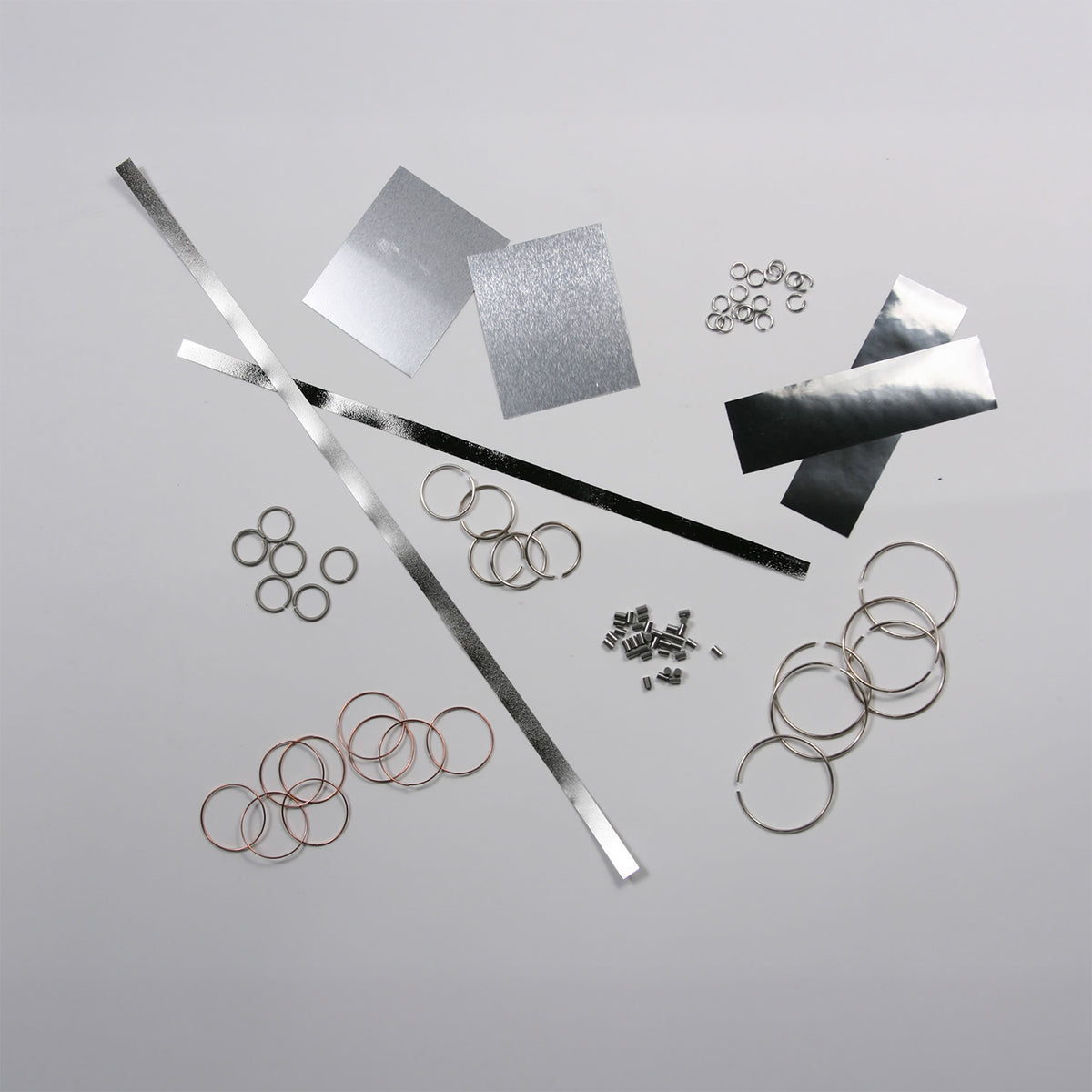
Silver Brazing Alloys for Special Applications

Alloy range
-
L-AG45SnSi
45% silver, 640–680°C. Tin and silicon additions (3.0% Sn, 0.25% Si) improve wetting on difficult-to-braze base metals where standard alloys perform poorly. The recommended specification for stainless steel, nickel alloys and other chromium-bearing materials. Use with Stay-Silv Black paste flux.
-
AG502
49% silver, 680–705°C. The addition of manganese and nickel (7.5% Mn, 4.5% Ni) enhances flow and wetting on tungsten carbide and hard metal inserts. The recommended specification for brazing cutting tool inserts, saw tips and wear-resistant components. Use with Stay-Silv Black paste flux — mandatory for carbide joints.
-
Aerospace grades
AG103, AG105, AG107 and L-AG45SnSi. Conforming to EN1044, BS1845 and EN17672. Widely specified across UK aerospace for structural and fluid system applications. Full certification and batch traceability documentation supplied. Contact us to discuss your specific grade and documentation requirements.
-
High-temperature applications
AG206 and AG207 — 20% and 12% silver respectively, 800–870°C. For applications needing a higher brazing temperature or joint strength at elevated service temperatures. Silicon additions in both grades suppress zinc fuming. AG207 is the economy option for high-volume production, and AG206 is a lower-silver option for less demanding carbide joints.
Alloy specifications
All alloys conform to EN1044 and are manufactured from virgin raw materials — fully RoHS and COSHH compliant.
| EN1044 | % Silver | % Copper | % Zinc | % Other | Melting range |
|---|---|---|---|---|---|
| L-AG45SnSi | 45 | 24.75 | 27 | 3.0 Sn, 0.25 Si | 640–680°C |
| AG502 | 49 | 16 | 23 | 4.5 Ni, 7.5 Mn | 680–705°C |
| AG206 | 20 | 44 | 36 | 0.15 Si | 800–830°C |
| AG207 | 12 | 48 | 40 | 0.15 Si | 820–870°C |
| AG103 | 55 | 21 | 22 | 2.0 Sn | 630–660°C |
| AG105 | 40 | 30 | 28 | 2.0 Sn | 650–710°C |
| AG107 | 30 | 36 | 32 | 2.0 Sn | 665–755°C |
Flux selection for special applications
Flux selection is critical for special application brazing — and the correct flux differs from standard alloy work on copper and steel.
- Stay-Silv Black (FH12, active to 982°C) — mandatory for stainless steel, nickel alloys and tungsten carbide. Formulated specifically to penetrate the stable chromium oxide layer and the hard, chemically inert surface of tungsten carbide that standard flux cannot remove. Using GS30 or Stay-Silv White on these base metals will result in poor wetting and joint failure.
- GSHT5 (FH20, active to 1000°C) — for high-temperature alloys AG206 and AG207 on standard base metals such as mild steel where a higher-activity flux is required at elevated brazing temperatures.
- GS30 (FH10, active to 800°C) — suitable for AG103, AG105 and AG107 on copper, brass and mild steel where standard brazing temperatures apply.
Aerospace and defence grades
Aerospace grades are available in bare rod, wire and preform forms. Documentation requirements vary by customer and application — contact us to discuss your specific grade, form, quantity and certification requirements before ordering. We do not supply aerospace materials without confirming documentation requirements first.
Brazing tungsten carbide
Tungsten carbide is one of the most challenging base metals to braze reliably. Its hardness and chemical inertness mean that standard fluxes and alloys will not wet the surface without the correct specification.
- Always use Stay-Silv Black flux — it is specifically formulated for carbide and is the only flux in our range rated for this application.
- AG502 (49% silver, 680–705°C) is the recommended alloy for carbide joining. The addition of manganese and nickel enhances flow and wetting on the carbide surface, and its lower brazing temperature reduces thermal stress on the joint. AG206 (20% silver, 800–830°C) is a lower-silver option for less demanding joints.
- Joint design matters: a thin, consistent bond line with good fixturing is essential to manage differential thermal expansion between the carbide insert and the steel body.
- Cool slowly after brazing — rapid quenching risks thermal shock cracking in the carbide.
Frequently asked questions
Which alloy and flux should I use for stainless steel?
Specify L-AG45SnSi with Stay-Silv Black paste flux. L-AG45SnSi contains tin and silicon additions (3.0% Sn, 0.25% Si) that improve wetting on stainless steel and other chromium-bearing alloys, with a melting range of 640–680°C. Stay-Silv Black is specifically formulated for stainless steel, nickel alloys and tungsten carbide — rated FH12, active to 982°C. Using standard GS30 or Stay-Silv White flux on stainless steel will result in poor wetting and joint failure. AG206 with GSHT5 is an alternative where a lower silver content and higher brazing temperature are acceptable.
What materials can be brazed with L-AG45SnSi?
L-AG45SnSi is specified for stainless steel, nickel alloys and other difficult-to-braze base metals where the stable surface oxide layer prevents standard silver alloys from wetting reliably. It can also be used on standard base metals (copper, brass, mild steel) where its low melting range (640–680°C) and good fluidity are an advantage, but AG103 or AG105 are generally more cost-effective for those applications.
Do I need special documentation for aerospace-grade materials?
Yes. This typically includes a material test certificate confirming chemical composition and conformance to the specification, and batch identification allowing the material to be traced back through manufacture. Documentation requirements vary by customer and application — contact us before ordering to confirm exactly what is required for your application. We do not supply certified aerospace materials without first confirming your documentation requirements.
Which alloy should I use for tungsten carbide?
AG502 (49% silver, 680–705°C) with Stay-Silv Black paste flux is the recommended specification for brazing tungsten carbide inserts. The addition of manganese and nickel (7.5% Mn, 4.5% Ni) enhances flow and wetting on the carbide surface, and Stay-Silv Black is the only flux in our range formulated for carbide joining. AG206 (20% silver, 800–830°C) is a lower-silver option for less demanding joints. Joint design is particularly important for carbide — use a thin, consistent bond line and cool slowly after brazing to manage differential thermal expansion and avoid thermal shock cracking in the carbide.
Can I use standard GS30 flux on stainless steel or nickel alloys?
No. GS30 is a general-purpose flux rated FH10, active to 800°C on standard base metals (copper, brass, mild steel). It is not formulated to remove the stable chromium oxide layer on stainless steel or the surface oxides on nickel alloys. Using GS30 on these materials will result in poor alloy wetting and unreliable joints. Always specify Stay-Silv Black (FH12, active to 982°C) for stainless steel, nickel alloys and tungsten carbide.
What forms are available for aerospace alloys?
Bare rod, wire and preform forms. Preforms — precision-formed rings, discs or shaped pieces in a specific alloy — are particularly suited to aerospace production environments where alloy quantity and placement must be tightly controlled. Contact us with your grade, form, diameter and quantity requirements for a quote. All aerospace materials are supplied with full certification and batch traceability documentation.
Why Choose GS Metal Joining?
-
Certified materials
All silver brazing alloys conform to EN1044. Manufactured exclusively from virgin raw materials — fully RoHS and COSHH compliant. Full certification and traceability documentation available on request.
-
Technical expertise
Over 110 years of combined experience in silver soldering and brazing. We advise on alloy and flux selection, joint design, process troubleshooting and specification compliance. Technical support is part of the service — not a premium add-on.
-
Competitive pricing
As a focused, efficient business with tightly controlled overheads, we offer genuinely competitive pricing at every order size — whether you are a small user, a specialist contractor or a volume distributor.
-
LINBRAZE partnership
As UK representative of LINBRAZE S.R.L. of Italy, we provide access to a world-leading manufacturer of metal powders and brazing pastes — including bespoke alloy formulations and specialist forms not available through standard distributors.