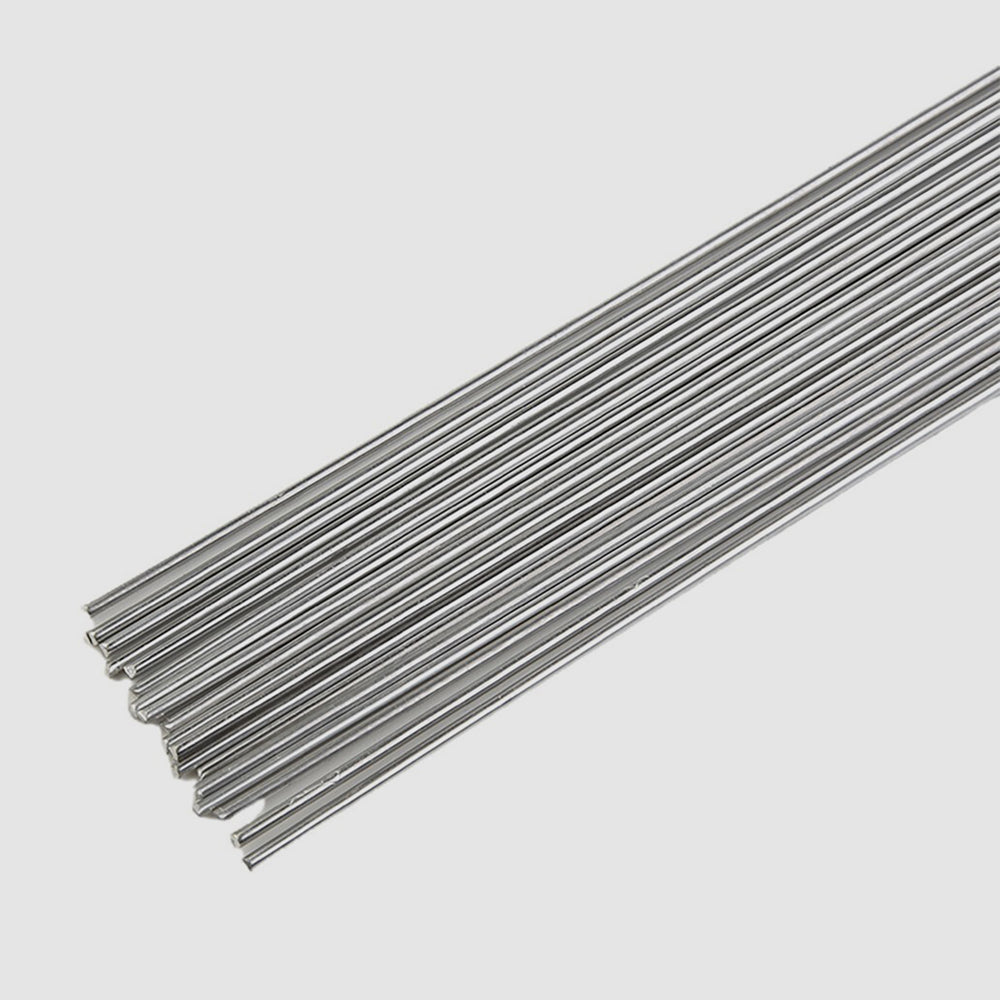
Aluminium Brazing and Soldering Alloys
Aluminium is one of the most challenging metals to join by brazing or soldering due to its tenacious, highly stable surface oxide layer and the proximity of its melting point to standard brazing temperatures. Specialist alloys and fluxes are required.
GS Metal Joining supplies a dedicated range of aluminium joining materials covering brazing, soft soldering and repair applications.
Standard cadmium-free silver brazing alloys are not suitable for joining aluminium. The alloys listed on this page are specifically formulated for aluminium and aluminium alloys.

Why aluminium is difficult to join
Aluminium is notoriously difficult to join because of its tenacious and highly stable surface oxide layer. This oxide reforms almost instantly when the surface is exposed to air, preventing molten alloy from wetting the base metal in the same way it would on copper, steel or brass.
The correct flux or mechanical abrasion technique is therefore essential — not optional — when joining aluminium. Each alloy in our range has a specific method. Using the wrong approach is the most common cause of joint failure on aluminium.
Alloy range
-
Al12Si — Aluminium brazing rod
12% silicon aluminium rod for general-purpose brazing. Melting range 575–585°C — close to pure aluminium (620°C), so heating must be carefully controlled to avoid melting the base metal. Use with AlSi flux. Propane recommended. Heat in 2–3 stages with short soak periods to allow the joint to absorb heat evenly before the alloy flows. Slightly belled joint geometry can improve results.
-
Alusol — Flux-cored aluminium solder wire
Low-temperature flux-cored soft solder wire for aluminium. Lead-bearing. Available in 1 metre lengths at 0.9mm and 1.5mm diameter. Will readily solder commercially pure aluminium and copper-aluminium alloys. Heat with a soft propane flame. The flux is incorporated in the core — no separate flux preparation required.
-
2207 — Lead-free aluminium solder
Lead-free, low melting point soft solder with excellent flow characteristics. Use with Stayclean Aluminium flux. Produces strong, leak-tight joints in a range of aluminium alloys and offers a reasonable colour match. Also joins aluminium alloys to copper, brass, stainless steel and mild steel — making it the preferred choice where aluminium is being joined to a dissimilar metal.
Flux selection for aluminium
Standard brazing fluxes used with silver alloys on copper and steel are not formulated for aluminium and will not work.
- AlSi flux — use with Al12Si brazing rod. Specifically formulated for aluminium brazing at the temperature range of the Al12Si alloy.
- Stayclean Aluminium flux — use with 2207 lead-free solder. Aggressive flux formulated to penetrate the aluminium oxide layer at soft soldering temperatures.
- Alusol — flux incorporated in the core. No separate flux required.
Joining aluminium to dissimilar metals
2207 lead-free solder with Stayclean Aluminium flux will join aluminium alloys to copper, brass, stainless steel and mild steel. This makes it the preferred specification for dissimilar metal joints involving aluminium — a requirement that standard silver brazing alloys cannot meet.
Standard silver brazing alloys are not suitable for aluminium. The melting temperature of most silver alloys is too close to the melting point of aluminium base metal, and conventional brazing fluxes cannot penetrate the aluminium oxide layer reliably enough for production use.
Heating technique for Al12Si
Because the melting range of Al12Si (575–585°C) is close to the melting point of pure aluminium (620°C), careful heat control is essential to avoid collapsing the parent material.
- Use propane — not oxy-acetylene. A softer flame gives better temperature control.
- Heat the assembly in 2–3 stages, pausing briefly between each to allow the joint to soak and heat evenly through the section.
- Watch the flux: it will become active and clear as the correct temperature is approached. Do not force the alloy before this point.
- A slightly belled joint geometry — where one tube end is slightly flared — can improve alloy flow and joint quality.
- Apply the rod to the joint, not the flame. The alloy will flow when the base metal is at the correct temperature.
Frequently asked questions
Can I use standard silver brazing alloys on aluminium?
No. Standard silver brazing alloys are not suitable for joining aluminium. The melting temperature of most silver alloys is close to the melting point of aluminium itself, making it extremely difficult to braze without melting the base metal. Conventional brazing fluxes also cannot reliably penetrate the aluminium oxide layer. Use the alloys on this page — Al12Si, Alusol or 2207 — which are specifically designed for aluminium joining.
Which alloy should I use to join aluminium to copper or steel?
2207 lead-free solder with Stayclean Aluminium flux is the recommended specification for joining aluminium to dissimilar metals including copper, brass, stainless steel and mild steel. It produces strong, leak-tight joints and offers a reasonable colour match on aluminium. Alusol (flux-cored wire) can also be used for some aluminium-to-copper combinations, but 2207 with Stayclean Aluminium is the more versatile option for dissimilar metal work.
Why is propane recommended for brazing aluminium with Al12Si?
The melting range of Al12Si (575–585°C) is very close to the melting point of pure aluminium (620°C). Oxy-acetylene produces a much hotter, more concentrated flame that makes it difficult to control the heat input precisely enough to avoid melting the base metal. Propane produces a softer, broader flame that allows the temperature to be built up gradually in stages — which is the correct approach for aluminium brazing with Al12Si.
Is 2207 solder RoHS compliant?
Yes. 2207 is a lead-free soft solder and is fully RoHS compliant. Alusol is a lead-bearing flux-cored wire and is therefore not RoHS compliant — specify 2207 with Stayclean Aluminium flux where lead-free compliance is required.
Why Choose GS Metal Joining?
-
Certified materials
All silver brazing alloys conform to EN1044. Manufactured exclusively from virgin raw materials — fully RoHS and COSHH compliant. Full certification and traceability documentation available on request.
-
Technical expertise
Over 110 years of combined experience in silver soldering and brazing. We advise on alloy and flux selection, joint design, process troubleshooting and specification compliance. Technical support is part of the service — not a premium add-on.
-
Competitive pricing
As a focused, efficient business with tightly controlled overheads, we offer genuinely competitive pricing at every order size — whether you are a small user, a specialist contractor or a volume distributor.
-
LINBRAZE partnership
As UK representative of LINBRAZE S.R.L. of Italy, we provide access to a world-leading manufacturer of metal powders and brazing pastes — including bespoke alloy formulations and specialist forms not available through standard distributors.