Skip to product information
1 of 1

Flux-Coated Silver Brazing Alloys

Flux-Coated Silver Brazing Alloys

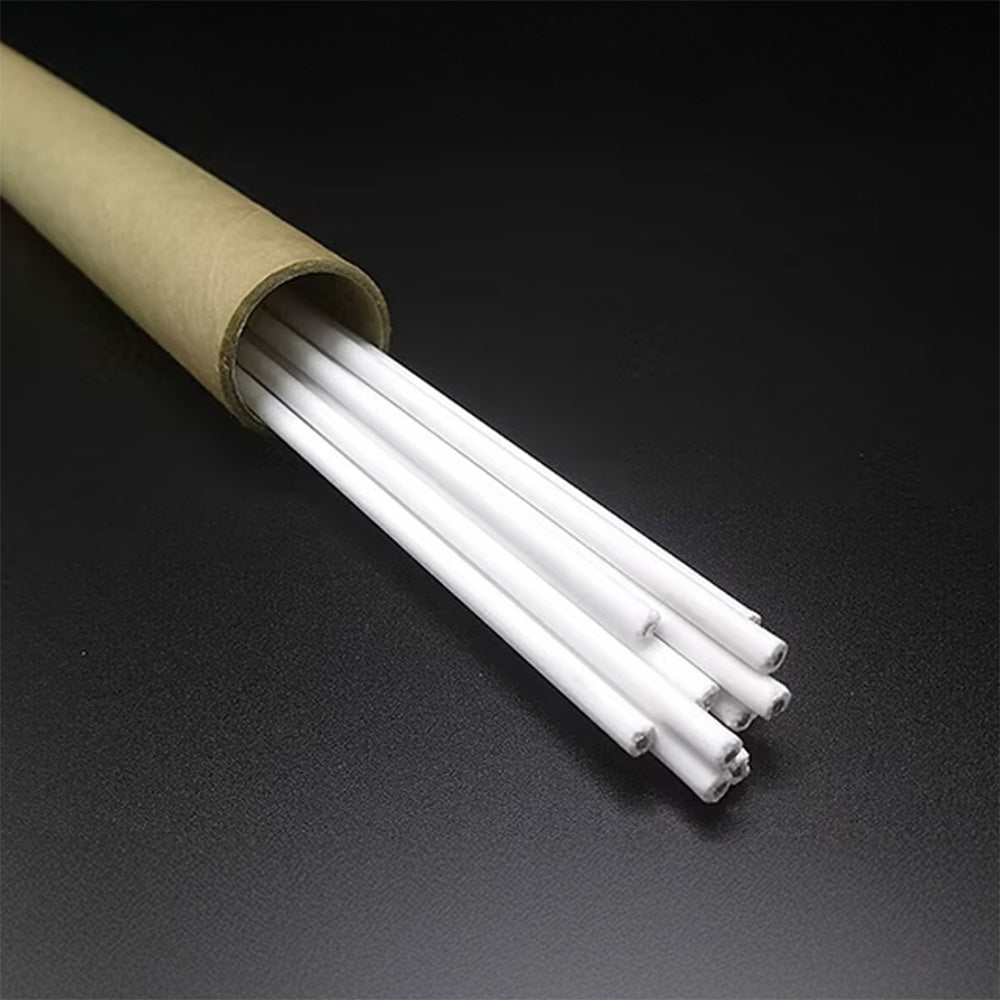
GS Metal Joining supplies a range of flux-coated silver brazing alloy rods, combining EN1044-certified silver brazing alloys with an integrated flux coating.

No separate flux is required for most standard applications, making them the practical choice for maintenance, site work and any environment where preparing paste flux is impractical. All flux-coated rods are available in 1.5mm and 2.0mm diameter and above.

View full details

How flux-coated rods work

The flux coating contains the same chemical compounds found in conventional paste flux. During brazing, the coating activates ahead of the alloy on the heated base metal surface, removing surface oxides and promoting wetting and capillary flow. The alloy is then drawn into the joint gap in the normal way.

Flux residues are water-soluble and easily removed after brazing with warm water and a stiff brush, or with a dilute citric acid solution.

Alloy range

All flux-coated rods are available in 1.5mm and 2.0mm diameter and above. Best results are obtained with lower melting point alloys. The flux coating is flexible but should be handled with care to prevent damage.

All alloys conform to EN1044. Manufactured from virgin raw materials — fully RoHS and COSHH compliant.

EN1044% Silver% Copper% Zinc% OthersMelting range
F-AG1035521222.0 Sn630–660°C
F-AG1054030282.0 Sn650–710°C
F-AG1073036322.0 Sn665–755°C
F-AG2062044360.15 Si800–830°C
  • F-AG103

    55% silver. The most versatile flux-coated alloy in the range. Lowest melting point (630–660°C), excellent fluidity, and the recommended starting point for most maintenance, field service and general fabrication work.

  • F-AG105

    40% silver. Good flow characteristics with a cost reduction over F-AG103. Suitable for general engineering and HVAC applications where a slightly wider melting range is acceptable.

  • F-AG107

    30% silver. A cost-effective option for copper and copper alloy joints in refrigeration and air conditioning. Good fluidity within a working range of 665–755°C.

  • F-AG206

    20% silver. Economy grade for less critical joints where a higher brazing temperature (800–830°C) is manageable. Silicon addition suppresses zinc fuming at elevated temperatures.

Brazing technique

Heat the assembly broadly to a dull red heat before concentrating the torch on the area where you want the alloy to flow. This develops a heat pattern that controls metal flow. Apply the rod to the joint — not to the flame. The flux coating will activate on contact with the heated surface and the alloy will flow into the joint by capillary action.

Flux residues can be removed with warm water and a stiff brush, or with a dilute citric acid solution. Remove promptly — flux left in place can be mildly corrosive to the base metal surface over time.

When to specify flux-coated rods

Flux-coated rods are the practical choice for:

  • Maintenance and field service work
  • Site installation where preparing paste flux is impractical
  • Environments where water for flux preparation is not available
  • Low-volume and general fabrication work
  • Training environments where reducing process variables simplifies technique development

For production environments where flux coverage can be controlled precisely, or where specialist fluxes are required for stainless steel or nickel alloys, bare rods with separately applied paste flux are generally preferred. See our cadmium-free silver alloys page for the full bare rod range.

Compatible base metals

Suitable for copper, brass, bronze, mild steel, carbon steel and most standard engineering alloys. For stainless steel, nickel alloys or tungsten carbide, bare rod with Stay-Silv Black flux applied separately is the correct specification — the integrated flux coating on standard flux-coated rods is not formulated for these base metals.

Frequently asked questions

Do flux-coated rods need separate flux?

No. Flux-coated rods have the flux incorporated into the rod coating and do not require separate flux application for most standard applications. They are particularly convenient for maintenance and fieldwork where preparing flux paste is impractical. Bare rods always require a separately applied flux.

Which flux-coated rod should I start with?

F-AG103 (55% silver, 630–660°C) is the recommended starting point for most applications. It has the lowest melting range in the flux-coated range, excellent fluidity, and works reliably on copper, brass, bronze, mild steel and most standard engineering alloys. If cost is a consideration and the application allows a slightly wider melting range, F-AG105 (40% silver) or F-AG107 (30% silver) offer a meaningful saving without significant compromise in joint quality.

Can I use flux-coated rods on stainless steel?

Not with the integrated flux alone. The flux coating on standard flux-coated rods is not formulated to remove the stable chromium oxide layer on stainless steel. For stainless steel joints, specify bare rod L-AG45SnSi or AG206 with Stay-Silv Black paste flux applied separately. Stay-Silv Black is specifically formulated for stainless steel, nickel alloys and tungsten carbide.

How do I remove flux residue after brazing with flux-coated rods?

Flux residues from flux-coated rods are water-soluble. Remove with warm water and a stiff brush once the joint has cooled. A dilute citric acid solution can be used for more stubborn residues. Remove promptly — flux left in place can be mildly corrosive to the base metal surface over time.

What sizes are flux-coated rods available in?

Flux-coated rods are available in 1.5mm and 2.0mm diameter and above across all four grades (F-AG103, F-AG105, F-AG107 and F-AG206). Contact us with your diameter and quantity requirements for a quote. We supply both small users and volume distributors with no minimum order quantity.

What is the difference between flux-coated and bare brazing rods?

A bare rod requires a separate brazing flux to be applied to the joint before or during heating. A flux-coated rod has the flux incorporated into a coating around the rod, eliminating the need for separate flux in most applications. Flux-coated rods are particularly convenient for maintenance and fieldwork. Bare rods are generally preferred for production environments where flux application can be controlled precisely, and where specialist fluxes such as Stay-Silv Black for stainless steel are required.

  • Certified materials

    All flux-coated silver brazing alloys conform to EN1044. Manufactured exclusively from virgin raw materials — fully RoHS and COSHH compliant. Full certification available on request.

  • Technical expertise

    Over 110 years of combined experience in silver soldering and brazing. We advise on alloy and flux selection, joint design, process troubleshooting and specification compliance. Technical support is part of the service — not a premium add-on.

  • Competitive pricing

    As a focused, efficient business with tightly controlled overheads, we offer genuinely competitive pricing at every order size — whether you are a small user, a specialist contractor or a volume distributor.

  • LINBRAZE partnership

    As UK representative of LINBRAZE S.R.L. of Italy, we provide access to a world-leading manufacturer of metal powders and brazing pastes — including bespoke alloy formulations and specialist forms not available through standard distributors.